Big Wall Energy on a Renter's Budget: Your Complete Playbook for Bold, Damage-Free Decorating
Renting an apartment or house in the US right now is already expensive enough without handing back a chunk of your security deposit because you got a little too enthusiastic with a paint roller. But that fear — the very reasonable, very real fear of landlord consequences — shouldn't sentence you to a life of blank beige walls and zero personality.
Here's the truth: the gap between "renter-safe" and "looks like a design magazine" is much smaller than most people think. You just need to know where to look and what to avoid.
Start With an Honest Conversation (Seriously)
Before you spend a dollar on anything, consider having a direct conversation with your landlord. This sounds scarier than it is, and the upside can be significant.
Many landlords — especially individual property owners rather than large management companies — are more flexible than your lease makes them sound. If you approach the conversation professionally, explain what you want to do, and frame it as an upgrade rather than a modification, you might be surprised by the response. Some landlords will give verbal permission for removable wallpaper or temporary installations. Others might even let you paint if you agree to repaint before moving out.
Get anything beyond the lease terms in writing — a simple email confirmation is fine. It protects you both.
If your landlord is a hard no on everything, that's okay too. You've still got plenty of options.
Peel-and-Stick Wallpaper: The Game-Changer That Actually Works Now
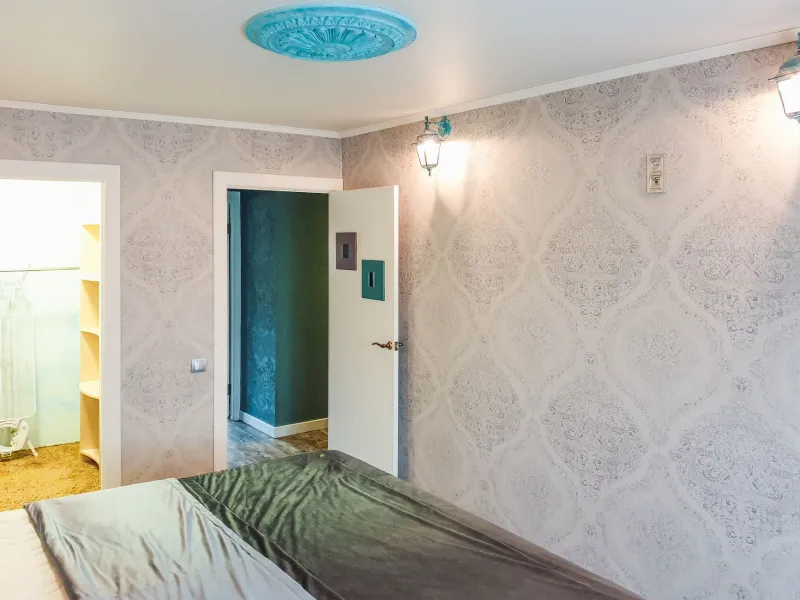
Peel-and-stick wallpaper has been around long enough that it's shed its reputation as a craft project that peels off the wall by Tuesday. The current generation of removable wallpaper — from brands like Chasing Paper, Tempaper, Walls Need Love, and several others — is genuinely good. It adheres cleanly, repositions without tearing, and comes off without taking your paint with it (as long as you follow the prep instructions).
The key to making it work:
Clean the wall thoroughly before you start. Any dust, grease, or residue will compromise the adhesive. A wipe-down with a slightly damp cloth and some time to dry completely goes a long way.
Don't apply it to fresh paint. If your apartment was recently painted, wait at least 30 days before applying any removable wallpaper. Fresh paint cures over time, and peeling adhesive off uncured paint is how you lose your deposit.
Use a squeegee or a credit card to smooth out bubbles as you go. The biggest rookie mistake is rushing the application. Slow down, work in sections, and smooth from the center outward.
When it's time to remove it, go slow. Peel at a low angle, close to the wall, rather than pulling straight out. Heat from a hair dryer can help release the adhesive on stubborn sections.
For a full accent wall, you're typically looking at $50–$150 in materials depending on the pattern and room size. That's a fraction of what paint and professional installation would cost — and it moves with you.
Fabric Panels: The Underrated Alternative
If you want something even more commitment-free than peel-and-stick, fabric wall installations are worth serious consideration. The concept is simple: stretch fabric over a frame (or hang it from a curtain rod mounted with Command hooks), and you've got a textile statement wall that comes down in minutes.
This works especially well in bedrooms, where a large fabric panel behind the bed functions as a soft, oversized headboard alternative. Choose a heavy linen, a printed canvas, or even a vintage textile from an estate sale, and the effect can look genuinely bespoke.
The beauty of fabric is that it's endlessly reusable. You can swap it out seasonally, take it to your next apartment, or repurpose it entirely. It's also great for renters in older buildings where walls are uneven or textured — fabric drapes over imperfections in a way that wallpaper simply can't.
Command Strips, Done Right
Command strips get a bad reputation, mostly from people who use them incorrectly. Used properly — on clean, smooth surfaces, within their stated weight limits, and removed according to the instructions — they're genuinely reliable.
The instructions matter more than people realize. You're supposed to press the strip firmly against both surfaces for 30 seconds, then wait a full hour before hanging anything. Most people skip the waiting. Don't skip the waiting.
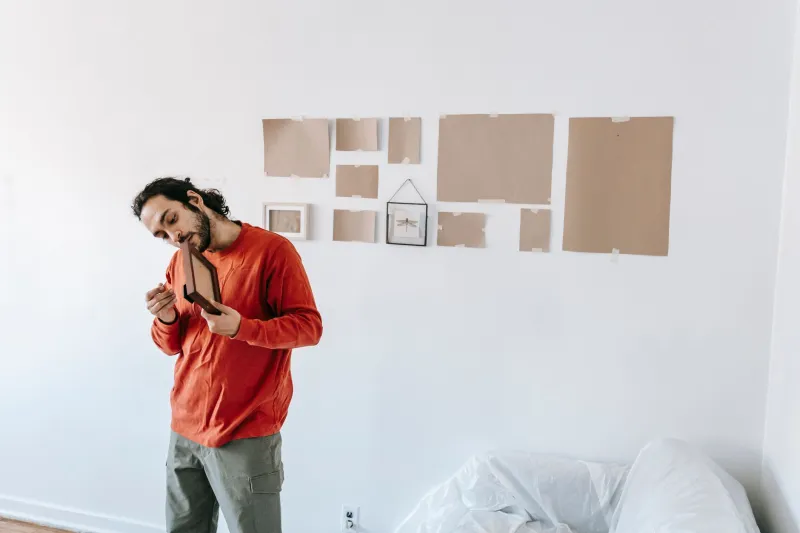
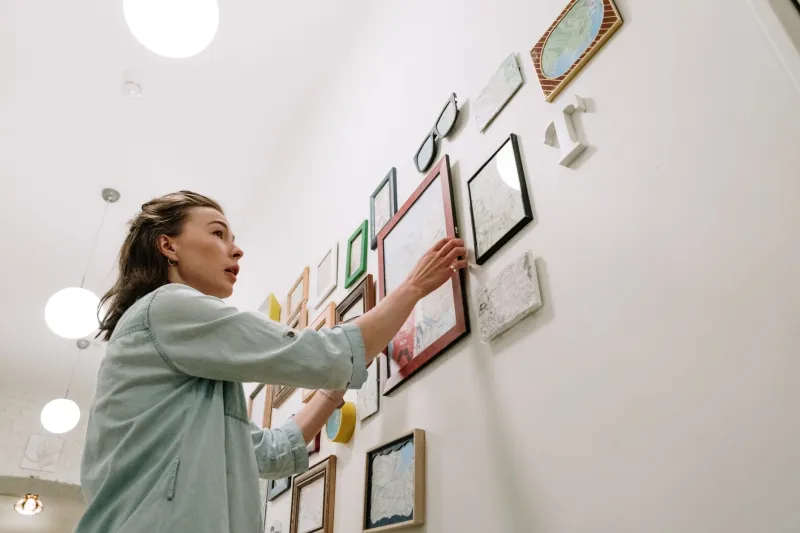
For heavier pieces — large mirrors, oversized frames, floating shelves — look into adhesive picture-hanging strips rated for higher weights, or consider leaning large pieces against the wall rather than hanging them. A large framed print leaned on a console table or propped on a picture ledge (which itself can be mounted with removable hardware) looks intentional, not lazy.
Furniture as a Wall Strategy
This one gets overlooked because it doesn't feel like "wall decorating" — but your furniture placement is one of the most powerful tools you have for making a wall feel designed.
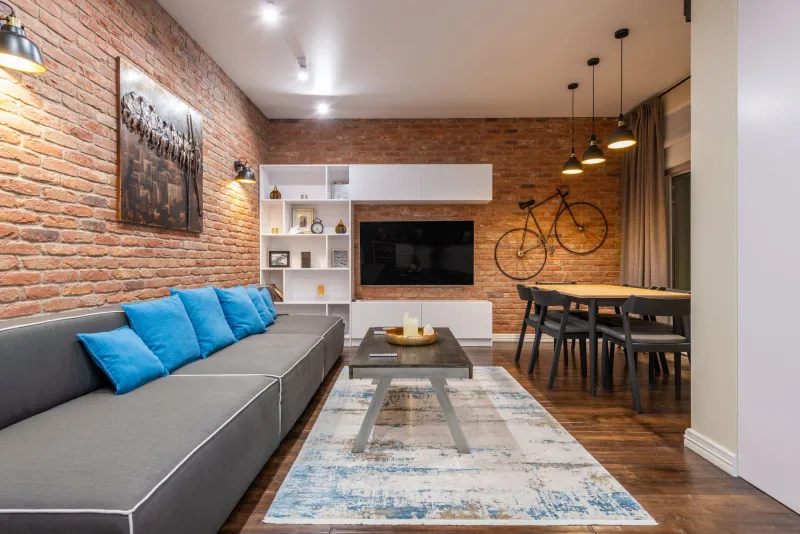
A tall bookcase pulled flush against a wall and styled thoughtfully does more for that wall than most art. A collection of objects arranged on floating shelves (Command-strip mounted) creates a gallery effect without a single nail hole. A floor lamp positioned to throw light up against a wall adds drama and draws the eye upward in a way that makes the whole room feel bigger.
Think of your walls and your furniture as a system, not separate elements. The wall behind your sofa, your bed, or your dining table is going to be the most-photographed, most-noticed surface in that room. Give it something to work with.
Your Pre-Move-Out Checklist
When it's time to go, a little preparation goes a long way:
- Remove all peel-and-stick wallpaper slowly and at a low angle; use a hair dryer on stubborn sections
- Follow Command strip removal instructions exactly — pull the tab straight down, slowly
- Touch up any minor scuffs with a small amount of paint (ask your landlord if they have leftover paint from your unit)
- Fill any small nail holes (yes, even renters usually make a few) with lightweight spackling compound and sand smooth
- Photograph the walls before and after your installation, and again before you move out
- Reference any written permission from your landlord if there's any dispute
Your space should feel like you — not like a holding pattern until you can afford to buy. With the right approach, bold and renter-safe aren't opposites. They're just two requirements you're designing around, and honestly? Constraints make for better creativity anyway.