Renter-Proof and Gorgeous: Wall Transformations That Leave Your Security Deposit Completely Intact
If you've ever stood in a freshly moved-into apartment staring at a sea of builder-beige walls and thought, I cannot live like this for two years — this one's for you.
Renting in the US is a reality for a huge and growing portion of the population. According to recent Census data, more than 44 million households in America are renter-occupied. That's a lot of people navigating lease clauses, landlord restrictions, and the particular kind of creative frustration that comes with wanting a beautiful, personal space when the terms of your tenancy say "no permanent alterations."
The good news? The gap between "what renters are technically allowed to do" and "what a stunning, personality-filled home looks like" has never been smaller. The market for damage-free wall solutions has absolutely exploded in the last five years, and the options available right now are genuinely impressive. Here's how to use them.
The Golden Rule of Renter Decorating
Before we get into the specifics, let's establish the framework: every decision you make about your walls should pass the reversibility test. Can it be removed cleanly, without damage, when you move out? If yes, you're good. If no, you're gambling with your deposit.
This isn't about being timid or settling for less. It's about being strategic. Some of the most visually stunning wall transformations happening in rental apartments right now are 100% temporary. The constraint actually pushes people toward more creative, more intentional solutions than they'd find if they could just pick up a brush and paint.
Removable Wallpaper: The Renter's Greatest Gift
If you haven't explored the current state of peel-and-stick wallpaper, you're in for a genuine surprise. This category has matured dramatically. Gone are the days of flimsy, bubble-prone sheets that look cheap from across the room. Today's removable wallpaper from brands like Tempaper, Chasing Paper, Walls Need Love, and Anewall offers designs that are genuinely indistinguishable from traditional wallpaper — rich textures, sophisticated patterns, and print quality that holds up to close inspection.
The installation process has also improved. Most current peel-and-stick options go up smoothly on clean, flat walls and come down without leaving residue or pulling paint. A few tips for success:
- Clean your walls thoroughly before application. Any dust or grease will compromise adhesion and make removal messier.
- Start with an accent wall rather than papering an entire room. A single bold wall behind your bed or sofa creates a massive visual impact without the complexity of a full-room installation.
- Measure twice, cut once. Most removable wallpaper is sold by the roll or panel — knowing your exact wall dimensions before you order will save you from running short mid-installation.
- Keep the backing strips until you're ready to move out, so you can reference the brand and batch if any touch-up removal is needed.
Command Strips, Done Right
Command strips have been the renter's go-to for years, but most people underuse them or use them incorrectly and end up with damaged walls anyway. Here's how to actually make them work.
First, match the strip type to the weight of what you're hanging. Command makes strips rated for different weights — using a lightweight strip on a heavy framed print is how you end up with a crash at 2 a.m. and a hole in your wall. Check the weight of your piece and use the appropriate product.
Second, follow the removal instructions to the letter. The key is pulling the tab straight down slowly — not at an angle, not quickly. Done correctly, Command strips come off cleanly every time. Done incorrectly, they take your paint with them.
Third, think beyond just frames. Command hooks, rails, and adhesive clips open up a whole world of hanging options — woven wall hangings, macramé, dried botanicals, string lights with clips for displaying photos and postcards. The visual effect can be layered and rich without a single nail.
Fabric and Textile Walls: Underrated and Gorgeous
One of the most underutilized renter decorating tools is fabric. Large-format textile hangings — think woven tapestries, quilts, vintage scarves, or even a beautiful piece of printed fabric stretched over a wooden dowel — can cover significant wall real estate and create incredible warmth and texture.
For apartment dwellers dealing with particularly bad walls (cracks, stains, or just aggressively ugly textures), a large textile piece is also a practical solution. It hides a multitude of sins while adding genuine visual interest.
You can hang fabric panels using tension rods mounted between walls in a corner, wooden dowels suspended from adhesive hooks, or curtain rods hung with Command products. None of these require drilling, and all of them come down cleanly.
Temporary Paint Alternatives
Okay, so you can't paint. But there are a few alternatives that come surprisingly close to the effect of a painted wall without the permanence.
Fabric wall panels in solid, saturated colors can mimic the effect of a painted accent wall. Mount them flush against the wall using a track system attached with removable adhesive, and the result reads from a distance almost exactly like a painted surface.
Color-blocked removable wallpaper in solid tones is another option — several brands now offer peel-and-stick sheets in flat, paint-like finishes specifically designed to replicate the look of a freshly painted wall.
Temporary wall panels — lightweight foam-backed fabric tiles that press onto the wall and peel off cleanly — are a newer category worth exploring. They're particularly popular for bedroom accent walls and home office backdrops.
The Art Arrangement Approach
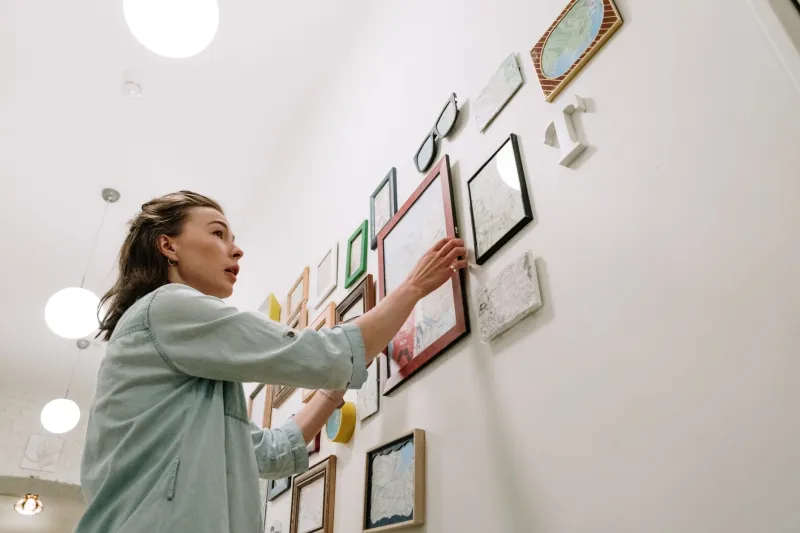
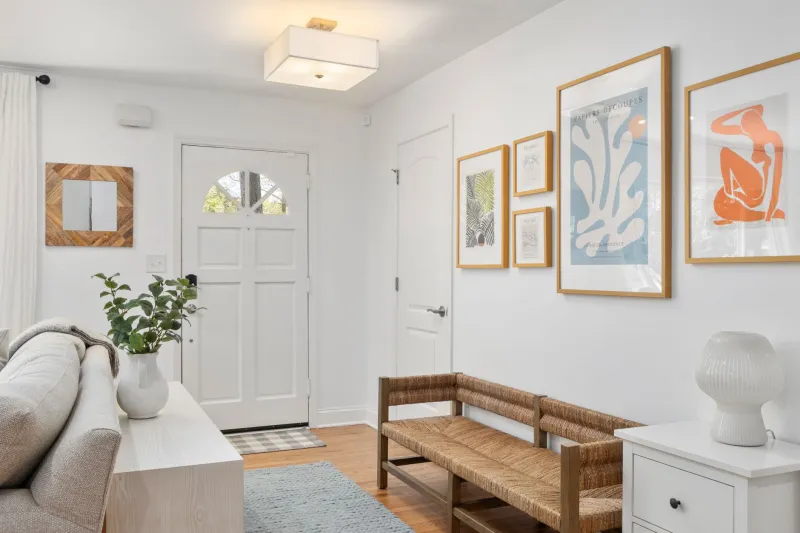
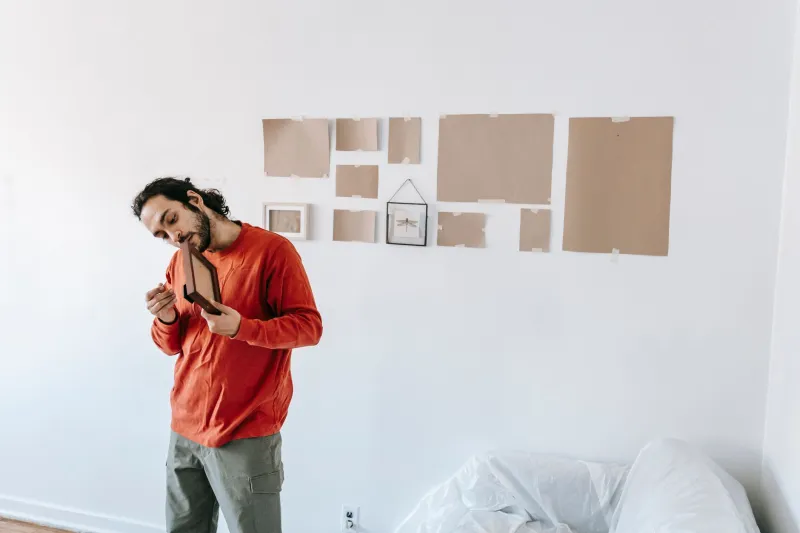
Sometimes the most powerful thing you can do with a rental wall is simply arrange art on it thoughtfully. A well-curated gallery arrangement — using picture ledges, Command strips, and a consistent framing system — can transform a blank white wall into something that looks completely intentional and designed.
The key is treating the wall like a composition. Use a mix of sizes, vary the content (photography, illustration, typography, abstract), and give yourself permission to rearrange until it feels right. Lean some pieces on shelves or furniture rather than hanging everything — this adds a layered, editorial quality that feels very current.
A Note on Talking to Your Landlord
Finally — and this might be the most underrated tip in this entire guide — consider just having a conversation with your landlord before you assume everything is off-limits. Many landlords, particularly individual property owners rather than large management companies, are open to negotiating. Offer to repaint the room yourself (to the original color) when you move out, and you may find they're happy to let you paint in the meantime.
You won't always get a yes. But you might, and that changes everything.
Until then: your walls are not a limitation. They're a canvas — and you have more tools to work with than you think.