The Four-Season Wall: How Swapping Your Décor (Not Your Furniture) Keeps Your Home Fresh All Year
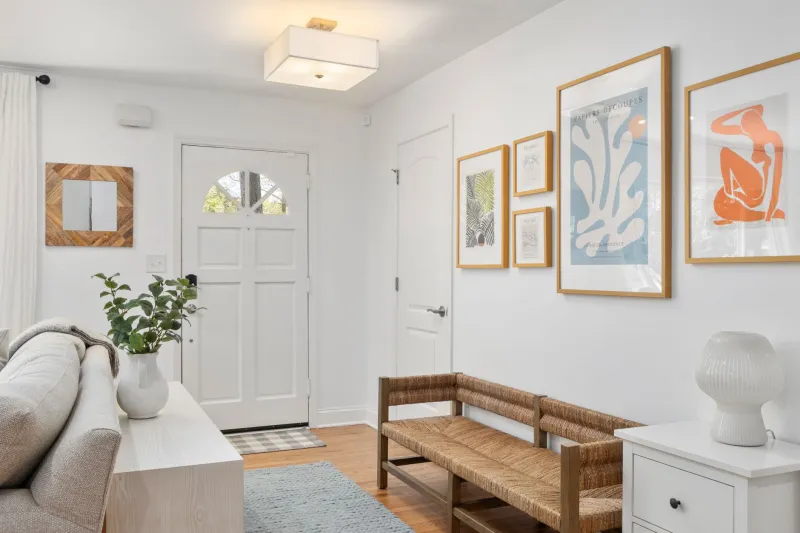
There's a specific kind of restlessness that hits around late August, or again in early February, when you look around your living room and think: I am so tired of this space. You don't hate your furniture. Your layout is fine. But something feels stale, and the idea of a full room refresh — with its associated price tag and weekend-consuming effort — feels like way too much.
Here's the thing most people don't realize: your furniture isn't what's making the room feel stale. Your walls are.
Walls are the single largest visual surface in any room. They set the emotional temperature of a space before anything else registers. And yet most of us treat them as permanent backdrops — paint them once, hang something, and forget about them for years. Meanwhile, savvy home decorators are doing something much more dynamic: rotating their wall décor with the seasons, the way a great retailer rotates a window display. The result is a home that always feels intentional, current, and alive — without a single piece of furniture ever moving.
Why Walls Are Your Easiest (and Cheapest) Refresh Lever
Think about what a seasonal wall rotation actually involves. You're not hiring anyone. You're not buying new sofas. You're swapping out artwork, changing up textile wall hangings, maybe peeling off a panel of removable wallpaper and replacing it with something that fits the new season. The cost is a fraction of any traditional home update, and the visual impact is enormous.
The average American spends somewhere between $1,500 and $5,000 on a single room refresh, according to home improvement surveys. A seasonal wall rotation? Depending on how you approach it, you can achieve a genuinely noticeable transformation for under $100 — sometimes well under.
Beyond the budget angle, there's something deeply satisfying about a home that shifts with the calendar. It mirrors the way we naturally change our wardrobes, our menus, and our routines with the seasons. Your walls can do the same thing.
Building a Rotation-Ready Wall System
The key to making seasonal rotations easy — rather than a production — is setting up your walls for flexibility from the start. This means thinking in terms of systems rather than permanent arrangements.
Gallery rails and picture ledges are your best friends here. A simple picture rail along one wall, or a row of IKEA MOSSLANDA ledges (a genuine cult favorite in the decorating community), lets you swap out framed prints in minutes without touching a single nail hole. You can completely change the look of a wall in under 20 minutes.
Interchangeable frames are another underrated move. Invest in a set of high-quality frames you love — maybe a mix of natural wood and matte black — and then change the art inside them seasonally. The frames stay; the feeling of the wall shifts entirely.
Removable wallpaper panels have gotten genuinely impressive in recent years. Brands like Tempaper, Chasing Paper, and Walls Need Love offer peel-and-stick options that go up cleanly and come down without drama. A single accent wall panel can transform a room for a season and be replaced with something entirely different when the mood shifts.
What a Seasonal Rotation Actually Looks Like
Let's make this concrete. Here's a simple framework for thinking through wall rotations across the year.
Spring/Summer: This is the season for lightness — both literally and visually. Swap in botanical prints, airy line-art illustrations, or abstract pieces with warm yellows, soft greens, and terracotta tones. Fabric wall hangings in lightweight linen or cotton add texture without weight. If you have removable wallpaper, this is the season for something with movement — a subtle tropical leaf print, a loose watercolor pattern, or a geometric in warm sand tones.
Fall: This is when you bring in depth and warmth. Rich burnt orange, deep burgundy, warm amber, and forest green all feel right at home against autumn walls. Swap in artwork with more visual weight — oil-style prints, moody landscape photography, or abstract pieces with dark, saturated palettes. Macramé and woven wall hangings in natural fibers feel perfectly seasonal here.
Winter/Holiday Season: Layer in coziness. Think velvet-framed prints, metallic accents, deep jewel tones, and anything with a sense of warmth and intimacy. This is also the season where a temporary wallpaper swap on a single accent wall — something in a deep forest green, navy, or even a moody dark floral — can make a room feel like a completely different space.
The Sustainability Angle Nobody Talks About
There's an environmental case to be made here, too. The "buy new furniture every few years" model of keeping your home feeling fresh is genuinely wasteful — and increasingly, people are aware of that. Rotating wall décor is a fundamentally more sustainable approach to keeping your space feeling alive.
When you buy quality art prints, frames, and textile pieces that you genuinely rotate and return to, you're not contributing to the cycle of cheap, disposable décor that ends up in landfills. You're building a curated collection of pieces that earn their place in your home across multiple seasons and years.
Some people even set up small informal swaps with friends — trading prints and wall hangings seasonally so that everyone gets variety without anyone spending more. It's the lending library model applied to home décor, and it works surprisingly well.
Starting Small: Your First Rotation
If this is a new concept for you, don't try to overhaul every wall at once. Pick one wall — ideally the one you see most often, like the wall across from your sofa or the one you face when you sit at your kitchen table — and commit to giving it a seasonal update.
Start by pulling together three to five pieces of art or décor you already own that you haven't been displaying. Chances are you have more to work with than you think. Rotate them in for the coming season and see how the room feels.
Once you experience the lift that even a small wall rotation gives a space, it becomes genuinely hard to go back to treating your walls as permanent. They're not a backdrop. They're part of the story — and like any good story, they should keep evolving.