Bare Walls Are Trending — But Is Less Really More for Your Home?
Something interesting is happening in American homes right now. People are taking things off their walls.
Not because they're moving or redecorating in the traditional sense — but because they've decided that empty space is, itself, a design choice. The minimalist wall movement has moved well beyond the realm of Scandinavian design blogs and high-end architecture magazines. It's showing up in apartments in Chicago, bungalows in Nashville, and ranch homes in Phoenix. And it's making a pretty compelling case for itself.
But here's the thing: minimalism isn't for everyone. And a trend this widespread deserves a genuinely honest look — not just at why it works, but at who it actually works for.
Why Minimalist Walls Are Having Their Moment
The timing makes sense if you think about it. The last several years have been, by most accounts, a lot. Overstimulation became a shared cultural experience — too much news, too many notifications, too many things competing for attention at once. For a lot of people, the home became the one place where they could actually control the input.
Minimalist walls are a direct response to that. A bare wall isn't just an aesthetic — it's a boundary. It says: nothing extra lives here. And in a world where everything is fighting for your eyeballs, that kind of visual quiet is genuinely restorative.
There's also a practical dimension. Fewer things on your walls means fewer decisions, less visual clutter, and an easier time keeping a space feeling clean and intentional. Minimalism, at its best, isn't about deprivation — it's about editing. You're not getting rid of everything; you're keeping only what earns its place.
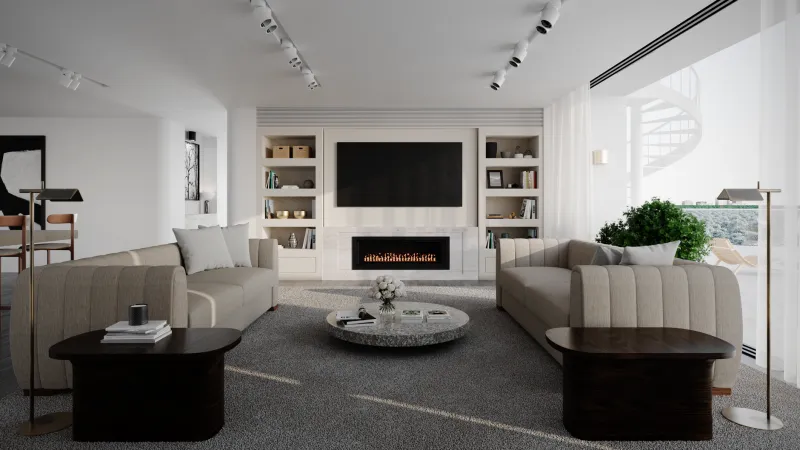
The aesthetic case is strong too. A single oversized piece of art on an otherwise bare wall hits differently than the same piece surrounded by seventeen other things. Negative space is a design tool, and minimalist walls use it deliberately. The emptiness isn't nothing — it's breathing room.
The Instagram Effect and Why It Complicates Things
Here's where we have to be a little careful. Minimalist interiors photograph beautifully. Clean lines, neutral palettes, thoughtful negative space — these are the conditions under which any room looks its most architectural and composed. Social media has amplified the minimalist aesthetic to the point where it can be hard to tell whether you're drawn to it because it genuinely resonates with you, or because it's what you've been trained to find aspirational.
There's a real difference between a home that's minimal because the person who lives there is genuinely at peace with empty walls — and a home that's minimal because the owner is chasing a look they saw on a design account and can't quite figure out why it still doesn't feel right.
If you've stripped your walls and the space feels calm and right, great. If it feels cold and unfinished, that's information worth paying attention to.
The Case for More: When Maximalism Is the Honest Answer
Maximalism gets dismissed a lot in contemporary design conversation — treated as the messy, undisciplined cousin of minimalism. That's not fair, and it's not accurate.
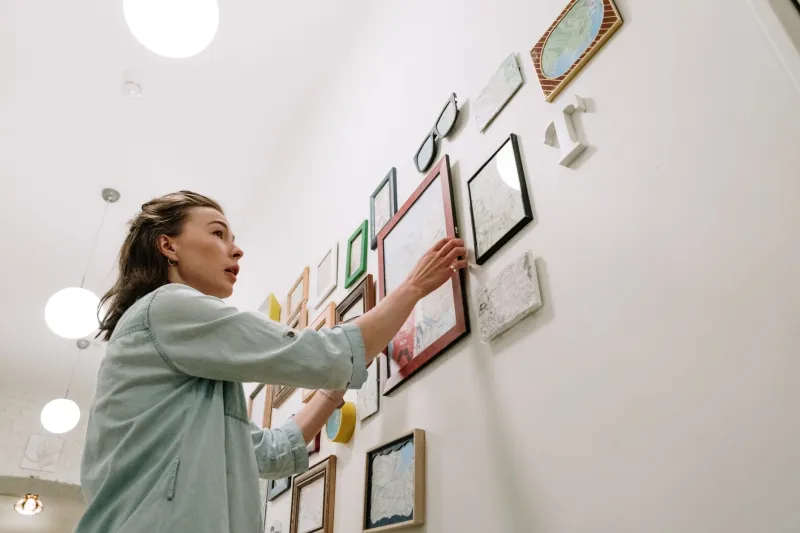
A maximalist wall — layered, full, visually rich — can be just as intentional as a bare one. The difference is that it's curated through addition rather than subtraction. And for a lot of people, it's simply more authentic.
Consider the person whose home is full of things they've collected over decades of travel. Or the family whose walls hold four generations of photographs. Or the creative professional whose studio walls are covered in references, clippings, and half-finished ideas pinned in overlapping layers. For these people, a bare wall wouldn't feel restful — it would feel erased.
There's genuine psychological research suggesting that people who identify as highly curious, emotionally expressive, or creatively oriented often feel more at ease in visually stimulating environments. Blank walls can actually increase a sense of anxiety or emptiness for people who are wired that way. The calm that minimalism promises isn't universal — it's personality-dependent.
And honestly? Some of the most charming homes in America are the ones that look like someone actually lives there. Where every object has a story and every wall has something to say. That kind of warmth is hard to manufacture when you're committed to keeping things spare.
How to Figure Out Which Side You're On
The most useful question isn't "is minimalism better?" — it's "what does my home need to feel like mine?"
Here are a few things worth sitting with:
When you walk into a very spare, minimal room, how do you feel? Genuinely calm, or a little empty? There's no wrong answer — but your honest gut reaction is more reliable than any design rule.
What do you do in the rooms you're thinking about? Rooms used for rest and focus often benefit from less visual stimulation. Rooms used for creativity, conversation, and gathering often benefit from more. It's not one-size-fits-all, even within a single home.
How do you feel about change? Minimalist walls are easy to live with long-term because there's less to tire of. But they also require a certain comfort with stillness. If you're someone who rearranges furniture seasonally and loves refreshing your space, a more layered approach might actually suit your temperament better.
What's your maintenance tolerance? A heavily decorated wall takes more upkeep — dusting, adjusting, occasionally editing. A minimal wall is easier to maintain. Neither is superior; they just require different things from you.
The Middle Ground Most People Actually Land On
Here's the honest truth: most people who think they want minimalist walls actually want edited walls. They don't want bare — they want intentional. They want to get rid of the things that ended up on their walls by accident (the mass-market print that came with the frame, the filler art bought to fill space) and replace them with things that genuinely belong.
That's a great goal, and it doesn't require committing to either extreme. A single well-chosen piece on a clean wall can coexist in the same home as a full gallery wall in another room. Your bedroom can be spare and quiet while your living room is layered and warm.
The minimalist wall trend is worth paying attention to because it's asking a good question: Does everything on your wall deserve to be there? But the answer doesn't have to be "take it all down." Sometimes the answer is just "be more choosy."
Your walls are telling your story. The goal isn't to tell less of it — it's to make sure every part of it is something you actually meant to say.