Your Walls Have a Story — Are You Actually Telling It?
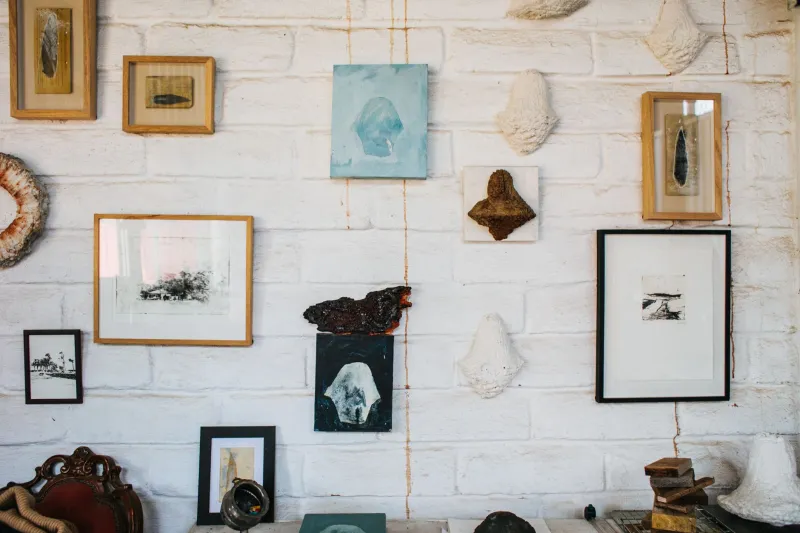
Scroll through any interior design account on Instagram or TikTok and you'll find them: the perfectly arranged gallery walls, the coordinated color palettes, the artfully placed vintage finds that look like they've been there forever. They're beautiful. They're aspirational. And for a lot of us, they're completely disconnected from anything personal.
There's nothing wrong with a gorgeous wall. But there's a growing conversation among designers, homeowners, and even psychologists about the difference between walls that look curated and walls that actually mean something — and why that distinction matters more than most of us realize.
The Problem With Trend-Chasing Your Own Home
Here's an uncomfortable question: if someone who didn't know you walked into your home, would your walls tell them anything true about who you are?
For many people, the honest answer is no. And it's not entirely our fault. We live in an era of extraordinary visual influence. Design trends cycle through social media at a pace that makes it nearly impossible to make a choice without wondering if it's already peaked. We're decorating for the photo, for the approval, for the aesthetic — not for ourselves.
"I've worked with clients who have genuinely beautiful homes that feel completely anonymous," says one interior designer based in Chicago who asked to remain unnamed. "Everything matches. Everything is 'on trend.' And yet when you sit in the space, there's no warmth. There's no story. It feels like a showroom, not a life."
The fix isn't necessarily to throw out everything you own and start over. It's to shift the question you're asking when you make decisions about your walls — from Does this look good? to Does this mean something?
What 'Meaningful' Actually Looks Like
Meaningful doesn't have to mean sentimental in an obvious, sentimental way. It doesn't have to be family photos or kids' drawings (though those can absolutely be part of it). Meaning can live in:
- A print from a city that changed you. That poster from the museum in New Orleans, the botanical illustration you picked up at a market in Portland — these are anchors to real experiences.
- Art you bought because it made you feel something you couldn't explain. That's not a flaw in your taste. That's your taste.
- Objects that mark time. A framed letter, a child's handprint, a page torn from a journal — these are the kinds of things that make a home feel inhabited rather than styled.
- Work by artists you actually know. A painting from a friend, a photograph by a neighbor, a print from a local artist whose story you can actually tell.
The through-line isn't style. It's authorship. A meaningful wall is one where you — not an algorithm, not a trend report — made the choices.
The Layering Framework: Building Over Time
One of the most common mistakes people make with wall collections is trying to do it all at once. They move into a new apartment or finish a renovation and immediately feel pressure to fill every wall now, usually by shopping in a single concentrated burst.
The result is walls that feel purchased rather than accumulated — and there's a real difference in how those two things feel to live with.
Instead, think about building your walls in layers over time. Here's a simple framework to work with:
Layer 1: The Anchor
Start with one piece that genuinely moves you — something you'd keep even if every other thing in the room changed. This is your anchor. It sets the emotional tone of the space and everything else responds to it, not the other way around.
Layer 2: The Conversation Pieces
These are pieces that have a story attached to them — something you can actually talk about when someone notices them. A piece of art from a local gallery opening. A photograph you took yourself. A vintage find with a mysterious history. These add depth and texture to the narrative your wall is telling.
Layer 3: The Fillers (Used Sparingly)
Yes, you can buy something simply because it looks nice and fits the space. But treat these as supporting cast, not leads. They fill gaps and create visual balance without carrying emotional weight — and that's fine, as long as they're not doing all the talking.
The Psychological Case for Walls That Reflect You
This isn't just a design philosophy — there's real research behind it. Environmental psychologists have long studied the relationship between personal space and well-being, and the findings consistently point in the same direction: spaces that reflect our identities make us feel more comfortable, more secure, and more ourselves.
A 2009 study published in the journal Personality and Social Psychology Bulletin found that people's living spaces communicate genuine personality traits — and that the process of intentionally shaping those spaces has a positive feedback effect on self-concept and mood.
In plain terms: when your walls reflect who you actually are, spending time in that room feels better. Not just aesthetically better — emotionally better.
"I always tell my clients that the goal isn't a home that looks like a magazine," says a residential designer based in Austin. "The goal is a home that feels like relief when you walk through the door. That only happens when the space is actually yours."
Practical Questions to Ask Before You Hang Anything
If you want to start building walls with more intention, try running any potential addition through these questions before it goes up:
- Where did this come from? If you can't answer that, it might not belong.
- What does this remind me of? Emotion is the point. If a piece triggers nothing, reconsider.
- Would I keep this if no one else ever saw it? This is the most important question. If the answer is no, it's performing for an audience — not living with you.
- Does this fit with what else is here — not just visually, but narratively? Cohesion doesn't have to mean matching. It can mean that everything on your wall belongs to the same story, even if the styles vary wildly.
The Permission Slip You Didn't Know You Needed
Here's the thing about meaningful walls: they rarely look perfect. They're often a little eclectic, a little mismatched, a little hard to explain. The frames might not coordinate. The styles might span decades. There might be a crayon drawing next to a museum print.
And that's exactly what makes them worth looking at.
Trend-chasing will give you walls that are impressive. Intention will give you walls that are yours. The first fades. The second only gets richer over time.
Your walls have space for a story. The only question is whether you're brave enough to tell a real one.